

Hidden Costs of Uncompressed Imagery in AEC Workflows

Updated: Aug 18
Today, with Architecture, Engineering, and Construction (AEC) projects, imagery is the backbone of AEC infrastructure as opposed to an ancillary product; high resolution aerial imagery, LiDAR-derived rasters, drone imagery and scanned drawings are being used in the decision making process for all areas including planning, design, construction and asset management.
However, the majority of organizations are still working with uncompressed/poorly optimised formats for storing images; this means that they are significantly unaware of the hidden operational, financial and performance implications these use cases have throughout their workflows.

Why Imagery Matters More Than Ever in Architecture, Engineering, and Construction (AEC)
Architecture, Engineering, and Construction (AEC) now relies on visuals as part of their workflows. This includes:
Analysis of sites and project feasibility
Mapping and surveying
Integrating Building Information Models (BIMs) with Geographic Information Systems (GISs)
Tracking the progress of construction Projects
Inspecting Infrastructure and Managing Assets
The amount of raster data collected using drones, satellites, and LiDAR is in the terabytes. The processes through which you store, share, and access such imagery will impact the overall project timeline and budget.
The Hidden Costs of Uncompressed Imagery
Growing Storage Needs
Uncompressed images (TIFF, RAW) can take 10-20 times the space than if they were compressed!
What this means in practice:
Higher on-prem storage costs
Increased cloud storage fees
More frequent hardware upgrades
Longer backup and recovery cycles
Over a period of time, these costs will add up and become unnoticeable—especially when you're dealing with multi-year infrastructure projects or statewide datasets.
Decreased Performance and Loss Of Productivity
Uncompressed images take longer to:
Load into CAD, GIS & BIM applications
Stream throughout networks
Open on mobile and field devices
Therefore, you will have:
Lag during your design review process
Slow rendering of maps
Delay for your team while they wait for data to work with.
Even a minor delay multiplied over many users and months of work can yield enormous amounts of lost productivity.
Network Bottlenecks and Coordination Challenges
AEC (Architecture, Engineering, and Construction) projects are becoming more collaborative and being completed in a more distributed manner. Uncompressed imagery presents an unwarranted burden on the following:
Virtual Private Networks (VPNs)
Cloud-based platforms for collaboration
Remote operations in the field
Transferring large files will slow down
Sharing data with both subcontractors and consultants
Accessing imagery while in the field
Managing and updating versions of the same image
The result of this will be outdated data being used by the team, or imagery being avoided altogether, which undermines the decision-making process based on data.
Limited Growth Potential for Existing Projects
As projects grow in size, uncompressed imagery will become a detriment. Introducing new items for future imagery; such as drone flights with increased resolutions, and LiDAR surveys could easily overwhelm the current system in place.
This would limit an organization’s ability to:
Expand geographic areas of interest
Utilize new methods of capturing (ie: drone photography, satellite imagery)
Maintain a digital twin of an asset long-term (i.e.: asset management)
Data Management and Archiving Hidden Costs
Beyond storage, uncompressed imagery increases:
Data handling complexity
Archive retrieval times
Long-term data preservation costs
Organizations that need to keep data due to regulatory/ legal requirements face continued operational issues caused by inefficient formats.
Why Compression Doesn’t Mean Compromise
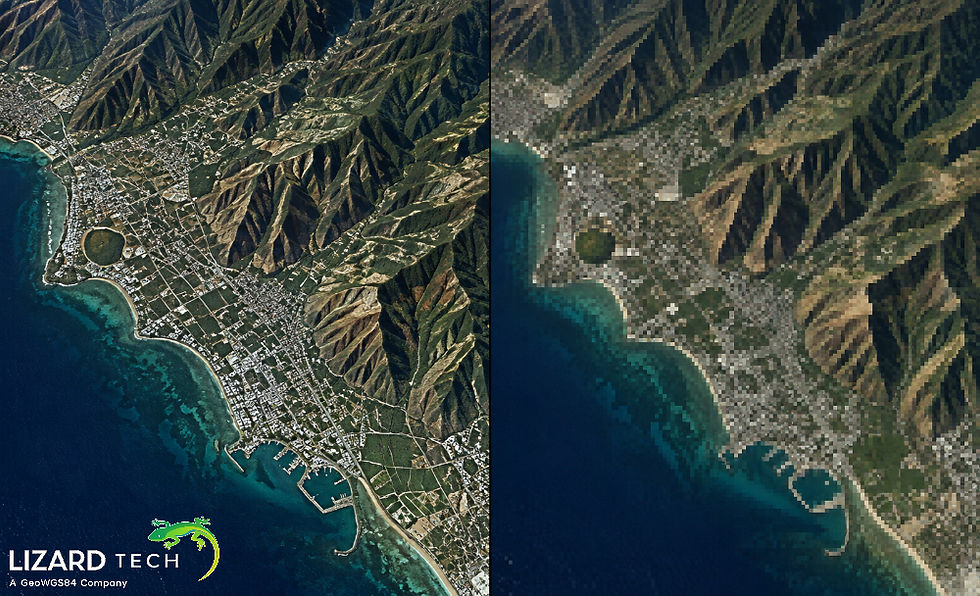
People often believe that if you compress an image to save space it will lose quality or lose its precision. The fact is that there are now specialized advances in jpeg2000 in the form of geospatial compression that purposely maintain the spatial integrity and visual fidelity of the images.
These new formats provide the following benefits:
You can perform lossless or visually lossless compression.
Rapidly access a massive amount of data, regardless of where the images reside on the hard drive.
Seamlessly integrate with GIS and CAD applications.
MrSID®: Built for High-Performance Architecture, Engineering, and Construction (AEC) Imagery
MrSID® (Multiresolution Seamless Image Database) is designed to allow users to more effectively govern their large format geospatial images.
Benefits of using MrSID in AEC Workflows:
High Compression Ratios: reduce file size dramatically while maintaining the image quality.
Fast Access and Fast Stream: allow a user to only open and view the part of a file that they need, rather than have to open an entire file.
Multiresolution Support: allows for a smooth zoom from the overview level to the full resolution level. Excellent for projects that require large areas.
Geospatial Integrity: maintains the accuracy of coordinates, which are very important for making engineering and construction decisions.
Wide Adoption: used in many GIS, photogrammetry, and Mapping Software applications.
Therefore, using MrSID allows AEC organizations to store, share, and analyze their images in a much more efficient manner without having to change the current workflow of their teams.
Real-World Impact for Architecture, Engineering, and Construction (AEC) Organizations
When organizations utilize optimized formats for imagery, such as MrSID, they commonly experience improved efficiencies and benefits, including:
Lower costs for storing and managing imagery data in the cloud or elsewhere
Quicker project delivery times
Enhanced collaboration with teams in different locations
Improved ability to scale for future projects
Reduced total cost of ownership (TCO) for imagery data
Future-Proofing AEC Workflows
As AEC projects have more data than ever before, image management has gone from being purely technical to being an important strategic consideration.
Choosing an appropriate image type will help with:
More efficient operations.
Support for large scale digital transformation projects.
Smart, quick and sustainable infrastructure development.
Although uncompressed images don't appear to have any associated costs initially, their latent costs eventually degrade performance, budget, and productivity in AEC workflows.
Organizations can realize the full value of their imagery without any trade-offs by using advanced, efficiently-designed formats such as MrSID to replace uncompressed image formats.
For more information or any questions regarding the LizardTech suite of products, please don't hesitate to contact us at:
Email: info@geowgs84.com
USA (HQ): (720) 702–4849
(A GeoWGS84 Corp Company)


Comments