

Why MrSID Is the Gold Standard for Raster Image Archiving

Updated: Apr 23
Geospatial data has seen an increase in use and thus an increase in demand for efficient storage, management, and distribution methods, particularly raster images. Due to the almost universal need for scalable and reliable high-performance raster image compression formats, ranging from federal agencies to GIS professionals to private industry, there has been widespread adoption of MrSID (Multi-Resolution Seamless Image Database) as the standard for the long-term storage of raster images.

What Is MrSID?
The MrSID file format is an advanced image format using wavelets to compress large raster datasets like aerial images, satellite images, and scanned maps. The goal of MrSID development was to overcome the limitations of traditional raster formats, allowing for the compression of very large raster images into significantly smaller files while maintaining the integrity of the original files.
The Challenge of Raster Image Archiving
The size of raster images can be significant. Large raster image files are frequently in the GB or TB range and present many challenges for traditional raster image formats, such as TIFF or JPEG, including:
High storage capacity requirements
Long rendering times
Slow data transfer
Limited scalability
Therefore, organizations that utilize geospatial data are looking for formats/ways to reduce their storage costs and obtain better access and performance.
Key Reasons Why MrSID Leads the Industry
Superior Compression Efficiency
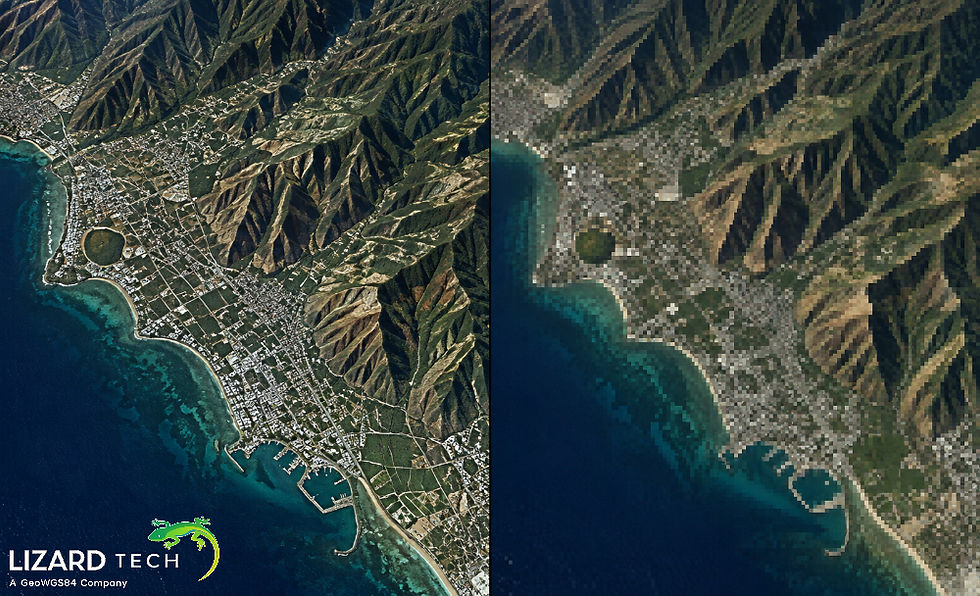
MrSID is a powerful wavelet compression technology that can shrink files by 95% or more. Organizations can now use less space to store more data and greatly reduce costs for their facilities.
MrSID retains the important characteristics found in an image, making it suitable for data that requires exactness.
Multi-Resolution Access
MrSID allows users to only view images at the resolution they need, rather than downloading a complete image file first. Benefits include:
More efficient ways to display images,
Less memory consumed by the GIS system,
Easier panning and zooming of images.
This makes MrSID a valuable tool for GIS applications using a web-based interface and large-scale mapping products.
Built to handle Big Data Workflows
Designed for processing extremely large raster data sets, whether it be a statewide aerial photography database or a worldwide satellite product, the MrSID format handles:
Large file sizes.
Highly efficient data streaming.
High-level performance that scales.
In addition, MrSID works for workflows that demand large quantities of data efficiently.
High Quality Visual Integrity
In some of today’s industries, such as surveying, urban planning, and environmental monitoring, it is critical to maintain the quality of images (such as edges, textures, colours, etc.) as they are compressed in size. MrSID achieves this by ensuring that visual details are preserved.
Additionally, MrSID's ability to preserve details makes it an ideal format for visualization and analysis.
Reduced Data Transfer Time
Because MrSID file sizes are small, they can be transmitted over networks faster than other file formats. Specific advantages include:
Faster upload and download speeds
Improved cloud performance
Easier sharing across teams and stakeholders
This is especially advantageous to organizations that have distributed teams or remote access systems.
Broad Industry Acceptance & Proven Reliability
MrSID is accepted and used by many industries, such as:
Government
GIS and mapping
Environmental
Utilities/infrastructure
MrSID has a long history in the marketplace & consistently rates as a reliable solution for archiving raster images.
Challenge-Free Integration with GIS Software
MrSID can be used seamlessly with all major GIS software and workflows and does not require substantial changes to your current system for compatibility. This provides you with faster implementation and broader support for MrSID formats in your organization.
Use Cases Where MrSID Excels
Scenarios in which MrSID excels include:
Archiving massive aerial imaging databases.
Managing satellite imaging libraries.
Delivering imagery using web mapping services.
Archiving historical maps and scanned documents.
The flexibility offered through MrSID supports both long-term preservation as well as instant access to current imagery.
Future-Proofing Your Raster Data Strategy
As data continues to expand, companies need technologies that can grow as well. When evaluating options, there are two main types of technologies available - those that have already been established and those that are still being developed. MrSID provides both solutions.
The following capabilities will help your organization determine which option is the best fit for your current challenges and future growth:
Scalability
Storage Optimization
Data Preservation
By selecting a format that meets your needs today, you're ensuring sustainable data management into the future.
By providing outstanding compression, performance, and scalability of raster image archives, MrSID has established itself as an industry leader in the field. It has provided organizations with the ability to work with very large datasets without sacrificing the quality of the visual images, and has become an essential component of modern-day geospatial workflows.
If your organization is looking to optimize storage capacity, improve accessibility, and create a future-proof data foundation, MrSID should not only be considered but also provided as the gold standard against which all other products will be compared.
For more information or any questions regarding the LizardTech suite of products, please don't hesitate to contact us at:
Email: info@geowgs84.com
USA (HQ): (720) 702–4849
(A GeoWGS84 Corp Company)


Comments