

Top 5 Benefits of MrSID Image Format

Updated: Apr 23
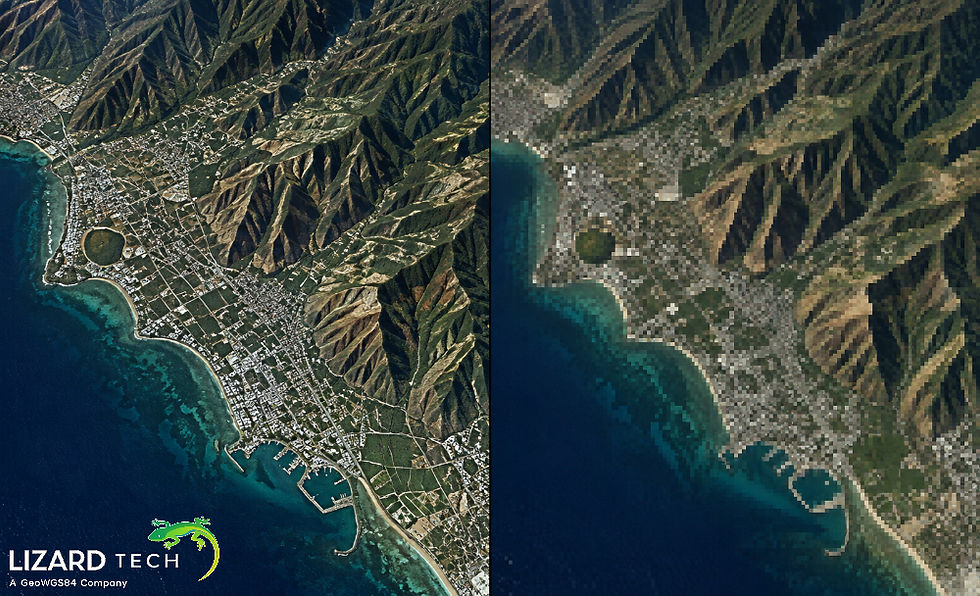
Due to the current surge in demand for high-resolution imagery for use in maps created from aerial surveys by drones and satellites, as well as scientific imaging systems, the resulting amount of data being produced is larger than at any time in history. The file types typically used for this type of image data, including TIFF and RAW, have dramatically increased in size, creating serious obstacles to the storage, transfer, and analysis of these large files, often resulting in file sizes of several gigabytes and/or terabytes. The MrSID image format helps eliminate many of these problems associated with the traditional raster image files.
The MrSID format is a proprietary image compression format that is based on the wavelet compression technique, which has proven to provide a superior balance between image quality and file size/performance when working with large raster images (i.e., mosaics (orthophotos) and non-ortho images). The MrSID format is also advantageous when transmitting or distributing large raster images via low-bandwidth communications systems.

Instant Viewing and Navigation of Massive Imagery
One of the standout benefits of the MrSID format is its ability to stream and display very large images instantly, even on modest hardware. Instead of loading an entire multi-gigabyte image, MrSID contains embedded pyramids — hierarchical levels of detail — that let you quickly view and zoom only the parts you need in real time. This selective loading dramatically speeds up image exploration compared to raw formats that load the whole dataset before display.
Efficient Storage and Bandwidth Savings
MrSID’s compression technology can reduce large image files by 20:1 or more, and in some cases by over 95%, without perceptible loss of visual quality. This efficiency helps organizations cut back on storage costs and makes it feasible to archive massive datasets or transfer them over networks without excessive bandwidth usage — all while preserving critical detail.
Visually Lossless or Lossless Compression Options
MrSID supports both lossy and lossless compression modes, giving users flexibility based on their priorities. Lossless compression ensures the image data can be restored exactly to its original state, which is crucial in applications requiring precision, such as scientific analysis or legal mapping. Visually lossless settings, on the other hand, achieve dramatic size reductions while maintaining an appearance that’s indistinguishable to the human eye.
Smart Multiresolution Access
Unlike standard file formats that require additional overview files or precomputed pyramid layers, MrSID’s format builds multiple resolution levels within the same file. This multiresolution architecture allows GIS and mapping applications to request only the appropriate detail level for the user’s current view. The result is smoother navigation, faster zooming and panning, and less memory consumption during interactive sessions.
Broad GIS Compatibility and Workflow Integration
MrSID isn’t just about compression — it’s designed to fit seamlessly into geospatial workflows. Popular GIS and remote sensing platforms like ArcGIS, QGIS, Global Mapper, ENVI, and ERDAS Imagine support MrSID, making it a reliable format for storing, sharing, and displaying imagery across software ecosystems. This interoperability ensures that MrSID files can be easily integrated into projects without compatibility hurdles.
Why MrSID Matters for Modern Imaging Workloads
The value of MrSID grows as datasets increase in size and complexity. For applications such as satellite image distribution, aerial mapping, environmental monitoring, or UAV data processing, the ability to compress, deliver, and interact with massive imagery in a performant way is central to operational efficiency. MrSID’s combination of fast access, efficient storage, and rich software support makes it a trusted choice for professionals handling large raster datasets.
The MrSID image format delivers robust advantages for anyone working with large raster imagery:
Fast, seamless viewing of huge datasets
Significant reduction in storage and bandwidth use
Options for lossless or visually lossless compression
Built-in multiresolution navigation
Widely compatible with GIS and remote sensing tools
As imagery continues to scale upward in resolution and volume, choosing a format like MrSID — optimized for performance without compromising quality — can streamline workflows and maximize productivity for geospatial professionals.
For more information or any questions regarding the LizardTech suite of products, please don't hesitate to contact us at:
Email: info@geowgs84.com
USA (HQ): (720) 702–4849
(A GeoWGS84 Corp Company)


Comments